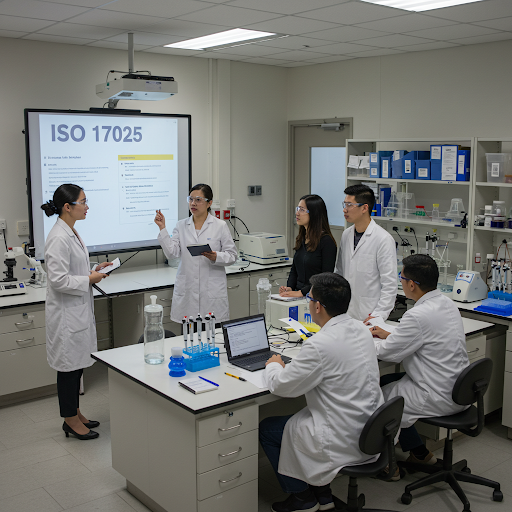
Laboratories are unusual workplaces. They run on numbers, yes, but also on trust. A test result is more than data; it’s a promise. Someone, somewhere, will make a decision based on that value—release a product, approve a material, validate a process, maybe even protect public safety. ISO/IEC 17025 exists to protect that promise. And internal auditor training is where the standard stops being abstract and starts feeling real.
If you’ve spent time in a lab, you already know this: technical competence isn’t just about knowing how to run equipment. It’s about consistency, judgment, and knowing when something doesn’t feel right, even if the numbers look fine. ISO 17025 internal auditor training builds exactly that kind of awareness.
Why Internal Auditing Isn’t a Side Task Anymore
For a long time, internal audits were treated as routine housekeeping. Something to schedule, complete, file away. But labs have changed. Expectations are sharper now. Customers ask deeper questions. Accreditation bodies look closer. Data integrity, traceability, and uncertainty calculations aren’t optional conversations anymore.
Here’s the thing: internal audits are often the first place weaknesses show up quietly. Before a complaint. Before a failed external assessment. Before credibility takes a hit. The training prepares auditors to notice those early signals without panic or blame. You know what? That alone changes how people approach their work.
Understanding ISO 17025 Without the Intimidation
ISO/IEC 17025 can look dense at first glance. Clauses about impartiality, competence, method validation, equipment control, measurement uncertainty—it’s a lot. Internal auditor training breaks that down into something workable.
Instead of treating the standard like a rulebook, the course reframes it as a set of expectations tied to real lab behavior. Why does method validation matter? Because unverified methods produce confident-looking errors. Why is equipment calibration critical? Because drift is quiet, and labs are busy. Auditors learn to read the standard with purpose, not fear.
The Shift From “Checking” to “Understanding”
One of the biggest changes people notice during ISO 17025 internal auditor training is how their mindset shifts. Early on, many think auditing means checking compliance. Are procedures followed? Are records complete? That’s part of it, sure. But competence lives deeper.
Auditors learn to ask how and why. How was this uncertainty calculated? Why was this reference material selected? How does staff competence get maintained when workloads increase? These questions don’t accuse. They clarify. And clarity improves systems faster than pressure ever could.
Technical Competence Isn’t Static—and Auditors Learn That Quickly
Labs don’t stand still. Methods evolve. Instruments get upgraded. Software changes quietly in the background. Internal auditor training teaches participants to look at competence as something that needs steady attention, not a one-time qualification.
An analyst who was competent two years ago might need refreshers today. A method that worked well before might behave differently with a new matrix. Auditors are trained to evaluate these shifts without drama. Honestly, this is where the training earns its value.
Auditing People Without Making It Personal
Let’s be real for a moment. Auditing can feel uncomfortable. No one loves having their work reviewed. ISO 17025 internal auditor training spends real time on this human side of the process.
How do you interview staff without sounding suspicious? How do you review records without implying mistrust? How do you raise a finding without bruising morale?
The answer isn’t soft language. It’s clarity, respect, and evidence. Auditors learn to separate the process from the person. That distinction protects both quality and relationships.
Documentation: More Than Paperwork
Every lab has documents. Procedures, work instructions, forms, logs. Some are useful. Some exist because they always have. Internal auditor training sharpens the ability to tell the difference.
Auditors learn to assess whether documentation supports consistent work or simply adds noise. Does the procedure match what actually happens at the bench? Are changes controlled, or do informal habits creep in? These aren’t academic questions. They affect repeatability, traceability, and confidence in results.
Measurement Uncertainty and the Auditor’s Eye
Measurement uncertainty often feels like a technical island—handled by specialists, reviewed occasionally, avoided in casual conversation. Internal auditor training gently brings it back into the wider system. Auditors learn enough to ask sensible questions. Is uncertainty evaluated for relevant tests? Are assumptions documented? Are staff aware of how uncertainty affects reported results?
No one expects every auditor to be a metrology expert. But understanding where uncertainty fits improves technical judgment across the lab.
Equipment, Software, and Silent Risks
Modern labs rely heavily on technology. Instruments generate data automatically. Software processes results instantly. That speed is helpful—but it also hides risk.
ISO 17025 internal auditor training teaches auditors to look beyond screens. How is software validated? How are backups handled? What happens during updates? These topics matter more than ever as labs digitize. Sometimes the most serious issues don’t announce themselves. Auditors are trained to notice what isn’t being discussed.
Internal Audits as a Learning Loop
One of the quieter lessons in the training is that internal audits aren’t just assessments; they’re learning tools. Findings highlight gaps, yes, but they also reveal where training, communication, or resources need adjustment.
Over time, labs with strong internal audit programs develop a rhythm. Issues get addressed earlier. Staff become more open. Reviews feel less tense. That rhythm doesn’t happen by accident. It grows from competent auditing.
Real Tools, Real Scenarios
Good ISO 17025 internal auditor training doesn’t stay theoretical. Case studies often reflect real labs—testing, calibration, medical, environmental. Auditors work through scenarios involving method changes, staff turnover, workload spikes, or supplier issues.
Sometimes the “correct” answer isn’t obvious. That’s intentional. Auditors learn to balance evidence, risk, and practicality. That skill translates directly to day-to-day lab decisions.
Accreditation and the Bigger Picture
Internal auditors also gain insight into how accreditation bodies think. What external assessors look for. How consistency across audits builds credibility. Why traceability and impartiality get so much attention.
Understanding this broader picture helps labs prepare calmly rather than reactively. Internal audits become rehearsal, not firefighting.
Growing Confidence, Quietly
Something subtle happens as people complete ISO 17025 internal auditor training. They speak up more thoughtfully. They ask clearer questions. They trust their technical judgment. Not louder. Just steadier.
That confidence improves meetings, reviews, and even client discussions. It’s hard to put a price on that kind of competence, but labs feel it.
A Final Thought That Sticks
Many people enter the training focused on compliance. They leave with skills that travel further. Internal auditors often become technical leaders, quality managers, or trusted reviewers across departments. The ability to assess systems objectively is valuable anywhere precision matters. And in laboratories, precision always matters.
ISO 17025 internal auditor training isn’t about finding faults. It’s about protecting trust—between data and decisions, between labs and clients, between systems and people. Technical competence doesn’t grow from pressure alone. It grows from understanding, consistency, and the courage to ask better questions. That’s what good auditors do. Quietly. Carefully. And with purpose.